Home / Patient Resources / Risk Factors

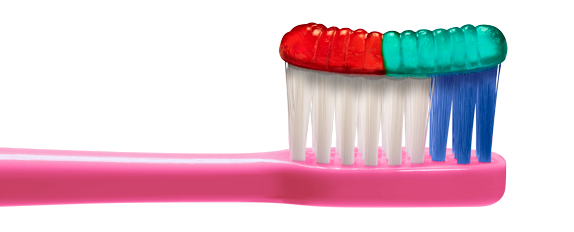
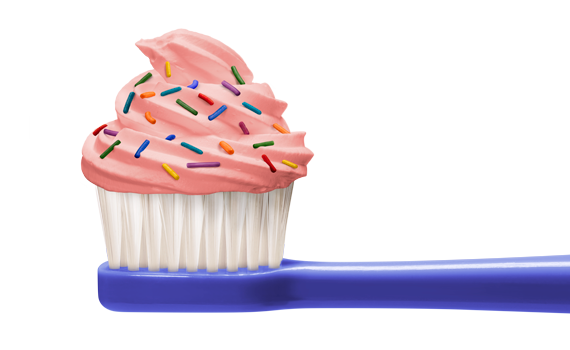
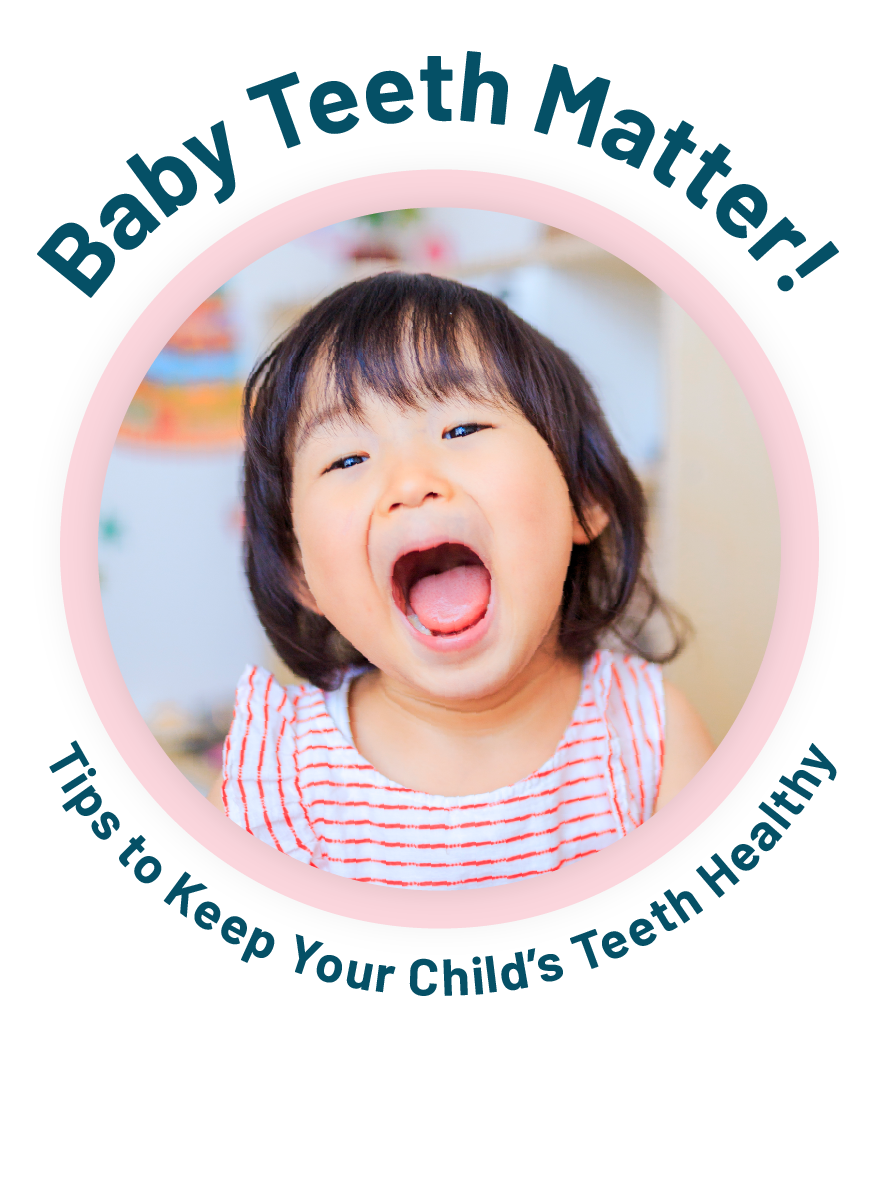
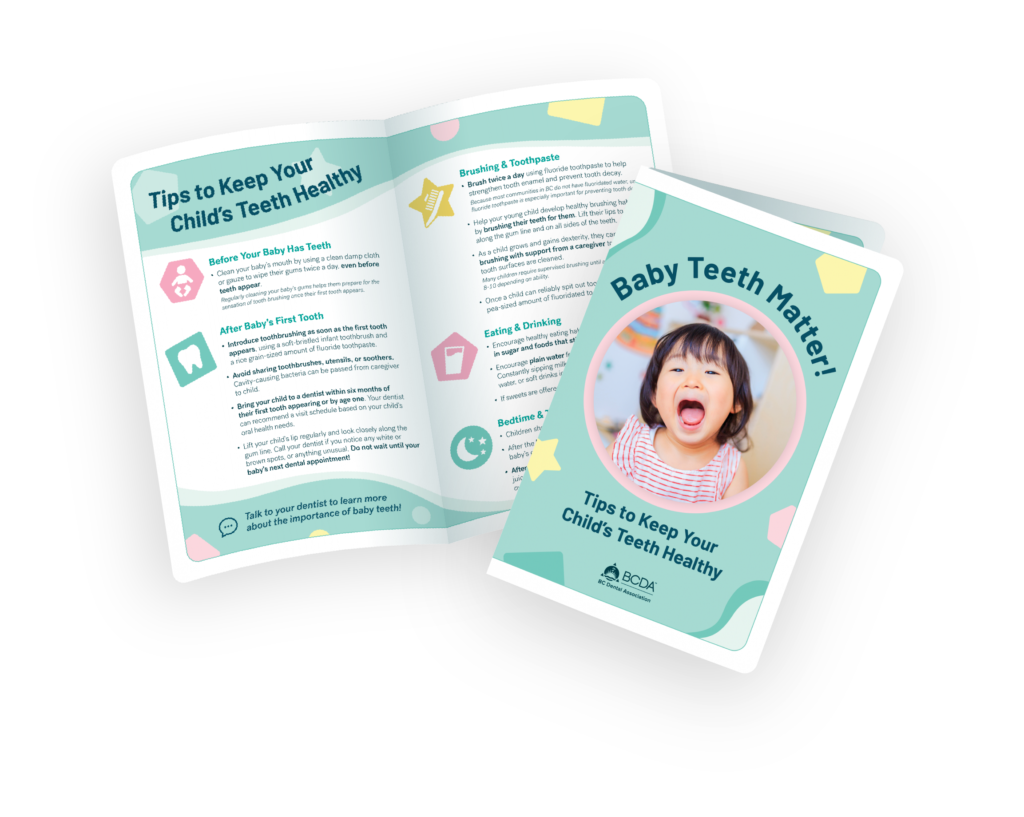
Baby teeth are important for your child’s overall health and development. They help support healthy eating, speaking and the positioning of their future adult teeth. Taking good care of them now helps set the foundation for a healthy smile later. As a parent or caregiver, you play a key role in helping your child develop dental habits from the very beginning.
Early childhood caries (ECC) is a common and severe form of cavities found in very young children (0-4 years of age). Without treatment, decay can spread deeper into the tooth, causing pain and infection and even damage to the underlying adult tooth. The baby tooth or teeth may need to be removed. Unfortunately, because of their young age, children may require treatment under sedation or general anesthesia at a hospital.
Baby teeth hold space for adult teeth. If a baby tooth is lost too early, other teeth may move into its space and block the way for the permanent tooth.
Unlike a toothbrush, cloth and gauze can help absorb excess milk that remains in the mouth after feeding. While a clean cloth is still recommended, gauze can be considered a more sterile material.
Cavity-causing bacteria can be passed between family members and may contribute to a child’s risk of developing cavities. Regular dental visits and treatment of active cavities can help reduce harmful bacteria in the mouth, lowering the chances of passing them on to your child.
Every child develops at their own pace. While age-based recommendations can be helpful, it’s important to consider your child’s individual abilities, and stage of development. The amount of toothpaste needed depends not only on age, but also on the number of teeth present. A child with only a few erupted teeth needs much less toothpaste than a child with a full set of baby teeth, as there is less tooth surface to clean.
Additionally, a pea-sized amount of toothpaste should only be used once your child can reliably spit it out rather than swallow it.
Similarly, a child’s readiness to brush independently depends on their dexterity and ability to clean all tooth surfaces effectively. While children may be able to hold and use a toothbrush on their own, they often still need supervision and assistance to ensure every tooth is cleaned thoroughly.
Limiting how often teeth are exposed to sugar is just as important as limiting how much sugar is consumed. Each time your child eats or drinks something containing carbohydrates, bacteria in the mouth produce acids that lower the mouth’s pH. Saliva helps neutralize these acids, but the mouth can remain acidic for about 20 minutes after eating. Frequent snacking can lead to longer periods of acid exposure, increasing the risk of cavities. When possible, serve sweets with a meal rather than as a separate snack. For example, dessert eaten with dinner counts as one acid exposure, while dessert eaten an hour later creates a second acid exposure.
Milk contains natural sugars that can remain on your child’s teeth after feeding. Putting your child to bed with a bottle allows these sugars to stay on the teeth for extended periods of time, which can increase the risk of tooth decay.
Regular dental visits support your child’s oral health and help create positive experiences at the dentist from an early age. Becoming familiar with the dental office and dental team can help your child feel more comfortable and confident during future visits. During your child’s first dental visit, the dentist will:
To help create a positive experience for your child:
Your dentist will recommend how often your child should visit, normally twice a year. catch potential problems early, before they become more serious. Children who are at increased risk of tooth decay, have unusual growth patterns, or who have poor oral hygiene may need more frequent visits.
X-rays are generally not taken until your child is old enough to understand how to cooperate with the procedure. X-rays show decay between teeth and also show if adult teeth are coming in properly. Under some circumstances, like an accident involving the mouth, dental X-rays may be done on children as young as a year old. The X-rays are safe for your child. Dentists are careful to limit the amount of radiation to which children are exposed.

Due to increasing frailty, the use of multiple medications, dry mouth and other health conditions, seniors may become more susceptible to dental disease including decay (root decay is a particular concern) and gum disease. Adults over the age of 40 are also at greater risk of being diagnosed with an oral cancer.
Older adults may begin to rely on others to support their basic dental care need. If you have an aging parent or are a caregiver consider the following:
Resources
The following resources are designed to assist family members, caregivers and health care professionals help seniors achieve good dental health. The development of these resources has been made possible through funding from the Ministry of Health Services.
Bad breath, gum disease, and cavities can all start with unclean dentures. Plaque and tartar buildup can cause stains, bad breath, and gum problems. Additionally, bacteria from dentures can spread to remaining natural teeth and gums, leading to gum disease and cavities. To prevent this, it is important to remove dentures from your mouth and clean them daily.
Osteoporosis is a condition that causes bones to become thin and porous, decreasing bone strength and leading to increased risk of breaking a bone. While it is often associated with women over the age of 50, osteoporosis can strike at any age, and affects both men and women. According to Osteoporosis Canada, at least 1 in 3 women and 1 in 5 men will suffer from an osteoporotic fracture during their lifetime.
Reduced bone density can also affect your mouth. As part of your regular dental exam, your dentists can detect changes in your mouth that may be signs of osteoporosis, such as:
If your dentist suspects you have may be suffering from this bone disorder, he or she can refer you to a physician for medical assessment and subsequent treatment.
Important: It is important to tell your dentist of any medications you are taking prior to dental treatment. Certain medicines (bisphosphonates) used to strengthen bones have been associated with a rare but serious condition called osteonecrosis of the jaw (ONJ) that can cause severe damage to the jawbone. Learn more
There are many steps you can take to reduce your risk of osteoporosis that can also benefit your dental health such as:
Learn more from Osteoporosis Canada: Osteoporosis Facts & Statistics and Health Canada: Seniors and Aging – Osteoporosis
The BC Dental Hygienists’ Association (BCDHA) and BC Dental Association (BCDA) joined forces in July 2025 to co-produce a new series of short, social media-friendly videos. The videos aim to help improve the daily oral health of seniors living in assisted and independent settings by de-mystifying and giving confidence to family members in helping their loved ones with daily tasks such as brushing, flossing, and using interdental tools.

Whether smoked or chewed, tobacco products are bad for your health and for your teeth. Negative effects of cigarette smoking include cardiovascular disease, increased risk for both oral and lung cancer, gum disease resulting in tooth loss, stained teeth and bad breath.
The long-term safety of e-cigarettes is not yet established, although initial data indicates that e-cigarette vapour damages cells and lowers certain enzymes important in maintaining tissue health and preventing cancer. E-cigarettes also increase the risk of seizure, tachycardia, disorientation, airway resistance, congestive heart failure, pneumonia, and second-degree burns from faulty devices.
Smoking and vaping can lower salivary output over time. Saliva is required to counteract the effects of acid in food and drinks. As a result, some heavy smokers and vapers can still get decay even if they are brushing well.
What you can do: Quitting smoking is the best way to decrease your risk. Visit QuitNow BC for help; it is British Columbia’s tobacco and nicotine cessation program, funded by the Ministry of Health and offered free to BC residents aged 10 and up through the BC Lung Foundation. The BC Healthy Living Alliance also has information and helpful resources.
Pain management: Dentists and patients should have conversations about pain management and bleeding before a dental procedure. Your dentist will carefully consider the benefits and risks of various pain management options before prescribing medication. Because your dentist knows there is a risk of addiction to opioids, he or she may discuss other ways to manage pain. Be aware that opioids are most beneficial for short-term pain management – such as a few days after surgery or an injury.
What you can do: Let your dentist know before your treatment about any medication you’re taking, including natural supplements, edibles and marijuana, heart medication, insulin for diabetes, and benzodiazepines. Also disclose whether and how often you’ve had any alcohol. Having a discussion like this is especially important if you’re going to be sedated. Take any medication exactly as your dentist, dental specialist or pharmacist have instructed.
The Canadian Dental Association offers Tips for Care After Minor Oral Surgery.
If you’re binge drinking, you’re putting your health and possibly your life at risk. We recommend you seek help from a medical professional and/or counsellor if you need help you stop this harmful behaviour.
As dental professionals, we also wanted to let you know that binge drinking damages teeth. Alcohol contains sugar and acid that attack tooth enamel, and vomiting also floods your mouth with acid. Furthermore, alcohol abuse increases your risk of oral cancer.
If you’re going out to drink, don’t overdo it. Make sure you have a safe ride home. And to protect your teeth, swish water around water your mouth after each drink to rinse away sugar and acid. Chew sugar-free gum on your way home to increase saliva flow, which will also help wash away sugar and acid.
Wait an hour after drinking alcohol before brushing your teeth and be sure to brush before going to bed so that sugar and acid won’t wear away tooth enamel while you sleep.
Using cannabis can have a serious impact on your oral health.
Edible forms of cannabis can be particularly dangerous as the level of THC in the product is difficult to control and the impact of the drug is long-lasting.
Tell your dentist if you use cannabis. Using cannabis (in any form) before a dental procedure can negatively affect the type and amount of medication or sedation you require, increase bleeding, and complicate your ability to heal.
Your dentist is here to help you with your oral health, no matter your situation. If you use street drugs recreationally or are struggling with dependence, it’s important to let your dentist know. These substances can impact your oral health and may interfere with other medications your dentist might suggest for your treatment plan. Sharing this information allows your dentist to offer the best care and support for your needs.

Dental care during pregnancy is not only safe, regular dental visits support your health and your baby’s. Your body undergoes a number of changes during the course of your pregnancy, and your mouth is no exception.
Gum disease: Gingivitis is characterized by sore, puffy and bleeding gums or periodontitis, a more advanced stage of gum disease involving the destruction of the supporting structures of the teeth.
Acid wear: Vomiting from morning sickness can wear away the enamel of your teeth.
Tooth decay: When your enamel breaks down your teeth are more susceptible to cavities (decay). Satisfying your pregnancy cravings by eating sugary foods can also contribute.
At your dental exam, your dentist may recommend:
Your dentist will work with you to determine your immediate needs as well as any procedures that can be postponed until after you have the baby.
BCDA uses cookies to enhance member experience and develop relevant content. By continuing to browse the site, you are agreeing to our use of cookies. Read more in our Privacy Policy & Terms of Use.